

Robot vacuum mop pressure is one of the least understood factors in automated floor cleaning—even though it can make or break your cleaning results. Many shoppers assume all hybrid robot mops work the same. In reality, differences in mop pressure and cleaning design directly impact floor care, especially on stubborn stains and high-traffic areas.
Key Takeaways
- No standard measure exists for robot vacuum mop pressure; product comparisons rely mainly on suction power (Pascals).
- Advanced mopping features—like vibrating and heated pads—deliver noticeable results, yet most robots still struggle with stuck-on messes.
- Surface type, design, and warranty should matter as much as “high mop pressure” when choosing your next robot vacuum mop combo.
- Understanding Robot Vacuum Mop Pressure: Why It Matters
- How to Maximize Cleaning with Robot Vacuum Mop Pressure
- Advanced Analysis & Common Pitfalls
- Conclusion
- FAQ
Understanding Robot Vacuum Mop Pressure: Why It Matters
Robot vacuum mop pressure refers to the force with which a robot’s mop pad presses against the floor. This factor can influence how effectively the robot scrubs away tough grime or sticky residue. While many brands promote advancements like higher suction power or innovative pad designs, most avoid publishing mop pressure data, creating confusion for buyers trying to compare options.
Unlike vacuum suction, typically measured in Pascals (Pa), mop pressure is rarely listed as a specification. Leading brands such as Dreame and ECOVACS focus on hybrid robots boasting suction up to 20,000 Pa or more, but remain vague about their mop pressure performance. According to market research, most manufacturers emphasize suction power for deep-pile carpets and hybrid functionality rather than providing transparent mop pressure data.source In 2024, true performance insights usually come from hands-on reviews and user forums rather than product specs—for example, Vacuum Wars assigns scores for mopping effectiveness instead of pressure metrics.
Understanding mop pressure is essential because inadequate pressure means a robot might glide over dried stains or sticky spots, leaving them behind. On the other hand, excessive pressure without proper design can damage fragile flooring or drain battery life faster. Choosing the right robot vacuum mop comes down to evaluating its features, real-world cleaning tests, the kinds of flooring you have, and the support offered by the manufacturer.
How to Maximize Cleaning with Robot Vacuum Mop Pressure
Follow these steps to achieve the best possible cleaning results with your robot vacuum mop combo, even when mop pressure data is unclear or missing from the box.
- Identify Your Main Messes and Floor Types
Make a list of your primary cleaning challenges: sticky spills in the kitchen, pet paw prints, or dust on hardwood. Also, note whether you have mostly hard floors or a mix with rugs and carpets—robot vacuum mop pressure plays out differently depending on the surface. - Select the Right mop pads and Cleaning Solution
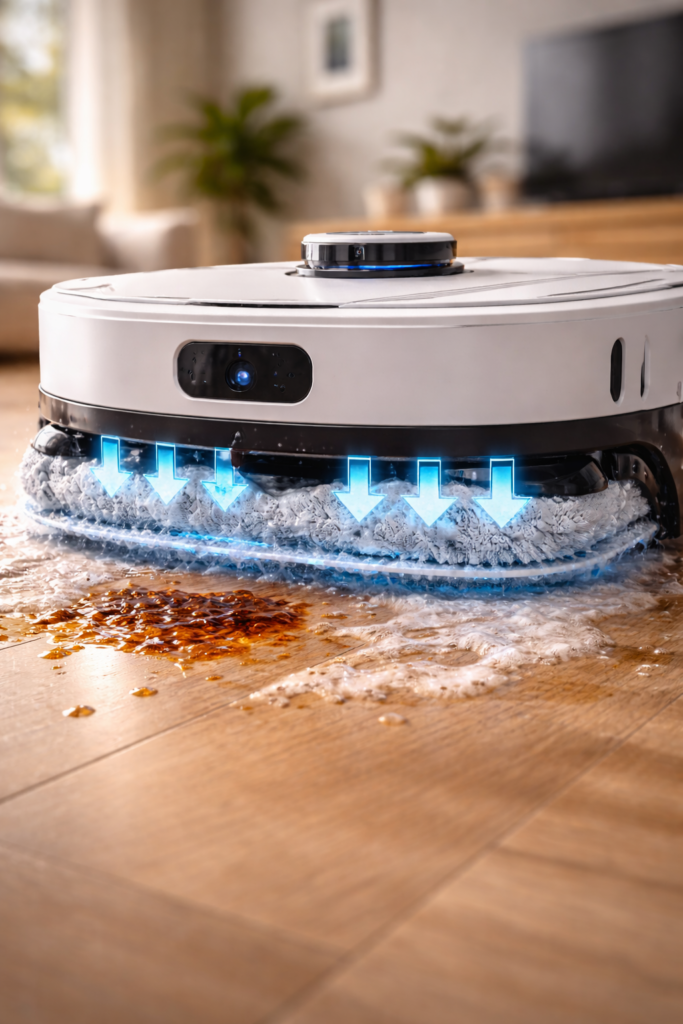
Use high-quality, washable mop pads (often microfiber or soft scrubbing blends) designed to maximize floor contact. Some brands offer heated or vibrating pads to simulate “scrubbing” action. Always check the robot’s manual for approved cleaning solutions to avoid harming components. - Experiment with Cleaning Modes
Most modern models provide various mopping intensities or customizable pressure/speed settings. Gradually try stronger modes and monitor how your floors respond. For sensitive surfaces like laminate or unfinished wood, start with lowest settings and observe pad dampness to avoid unwanted warping or streaks. - Utilize Features that Improve Mop Pressure Effectiveness
Features such as Y-shaped cleaning paths, oscillating mop modules, or heated pads increase contact time and effectiveness, sometimes compensating for lack of brute force mop pressure. Robots like the ECOVACS DEEBOT T30 and Xiaomi S40C implement these design advancements.source - Routinely Clean and Replace Mop Pads
Dirty or worn mop pads dramatically reduce cleaning performance, regardless of robot vacuum mop pressure. Replace or wash pads frequently—especially after heavy-duty use—so pressure consistently translates into cleaning action rather than just pushing around dirt.
- Consider upgrading to a robot with smart scheduling zones if you find certain areas need more intense care. Learn more in our detailed guide on robot vacuum scheduling zones.
Advanced Analysis & Common Pitfalls
Even with the latest models, several common pitfalls limit the effectiveness of robot vacuum mop pressure in daily use:
| Pitfall | Impact on Cleaning | How to Address |
|---|---|---|
| No Standard for Mop Pressure Measurement | Hard to compare models; marketing focuses on suction not mopping action. | Check real-world mopping reviews; use user-tested comparisons rather than relying on specs. |
| Limited Surface-Specific Performance Data | No clarity on which floors (tile, hardwood, laminate, etc.) benefit from higher mop pressure. | Test your robot on different areas and adjust routines. |
| High Claim Numbers Don’t Always Match Real Results | Impressive suction or “sonic” claims may not translate into cleaner floors, especially for sticky messes. | Focus on features backed by actual independent reviews, such as those from Vacuum Wars. |
| Carpet and Rug Limitations | Hybrid robots can sometimes drag wet mop pads onto carpets, risking moisture damage. | Utilize area avoidance mapping and scheduling to separate mopping and vacuuming tasks. |
| Price and Warranty Gaps | Higher price does not guarantee stronger mop pressure or cleaning, and extended warranties are not always included. | Look for bundled warranty promos during purchase; evaluate whether premium AI features justify extra cost for your needs. |
Notably, the research reveals most premium robots pour development into advanced mapping, AI navigation, and hybrid convenience—less so into increasing actual mop pressure. Even units like the Dreame X50 Ultra—touted for 20,000 Pa suction—do not publish mop pressure specs.source
- If your cleaning challenges revolve around deep stains or sticky residue, explore robots that offer advanced features such as auto-dosing or multi-pass mopping. See this guide: auto-dosing for robot mops.
Conclusion
Robot vacuum mop pressure gets a lot of hype—but the lack of industry benchmarks means buyers have to look past the marketing and focus on practical testing, build quality, and compatibility with their floors. High suction and sonic mopping help, but the most reliable cleaning comes from a combination of solid mop design, real-world user reviews, and routine care. Before you buy, consider your specific needs and test your robot if possible. Don’t forget: the best robot vacuum mop pressure is the one that reliably cleans your messes, on your schedule.
If you want your robots to reliably handle multiple rooms and surfaces, dive into our guide on robot vacuums with 3D mapping and multi-floor intelligence. Ready to upgrade? Research user-tested models, focus on your own cleaning needs, and let your smart cleaning strategy, not just pressure numbers, drive your decision.
FAQ
Is robot vacuum mop pressure more important than suction power?
No—both play a role. Suction power is crucial for picking up debris, while mop pressure helps with cleaning stains and sticky residue. Prioritize based on your messes and floor types.
How can I tell if my robot mop uses enough pressure?
Test by running your robot over dried spills or sticky grime. If it consistently leaves marks behind, the mop pressure or the cleaning motion/design may be insufficient.
Which floors benefit most from higher mop pressure?
Hard, smooth surfaces like tile and sealed hardwood typically clean best with higher pressure. Soft or unfinished surfaces (like laminate) may not require or tolerate high pressure.
Are there standardized ratings for robot vacuum mop pressure?
No—unlike vacuum suction (measured in Pascals), there are currently no industry standards or public third-party benchmarks for mop pressure.
Does higher price guarantee better mop pressure or cleaning?
Not necessarily. Premium robots often bundle advanced navigation, self-empty docks, or AI features. Reliable mopping still depends on real-world performance, not just price.